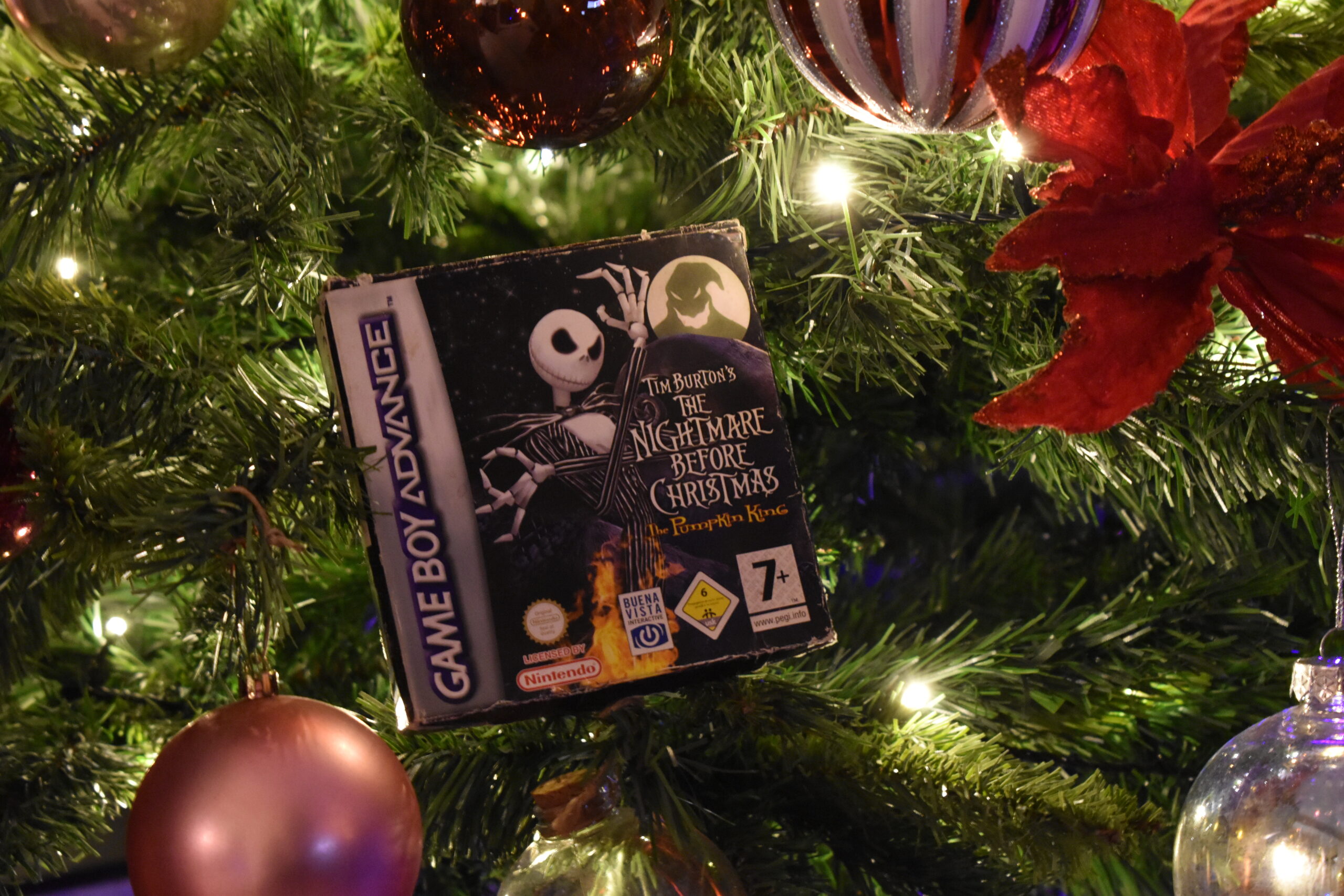
The Nightmare Before Christmas: The Pumpkin King – Oogie takes a cue from Dracula
OK, this might not be the best fit for a holiday title but it has Christmas in the name. The Nightmare Before Christmas: The Pumpkin King is no read-only memory for me. I recently found out that it combines 2 attributes that have already been featured on ROM, being TOSE-developed and a Metroidvania design, so I bit the bullet during a questionable Black Friday sale.
Two-faced like the town’s mayor, Pumpkin King gets the fundamentals of a 2D platformer right and celebrates the world in which it takes place but it has a robotic understanding of Metroidvanias.
It is as if it coldly absorbed each individual design staple and stitched them all together, without much thought as to why it is doing so, even if the result is functional.
TOSE’s bread and butter
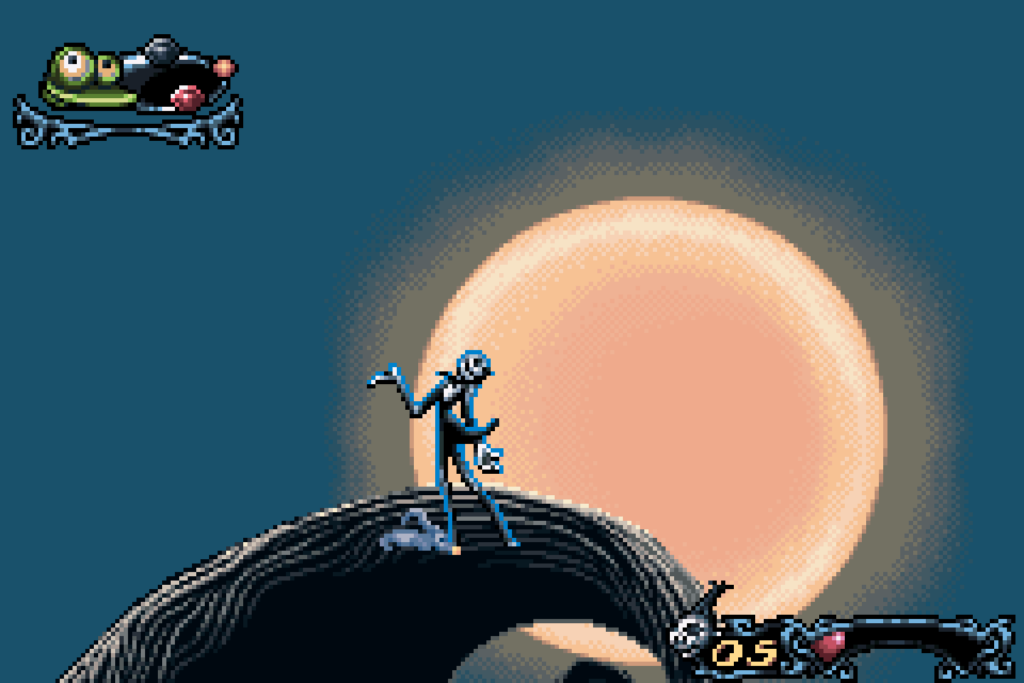
Pumpkin King’s art and animation does the source material justice. Jack’s lanky figure is very expressive, with a blue outline that helps him pop-out against the dark background. Idle animations, dialogue gestures and boss reactions add unique visual flare and polish you would not typically expect from a licensed game of the time. As static images, there are only about a dozen beautiful sprites and backgrounds but motion is where the game shines. Including the dancing scene.
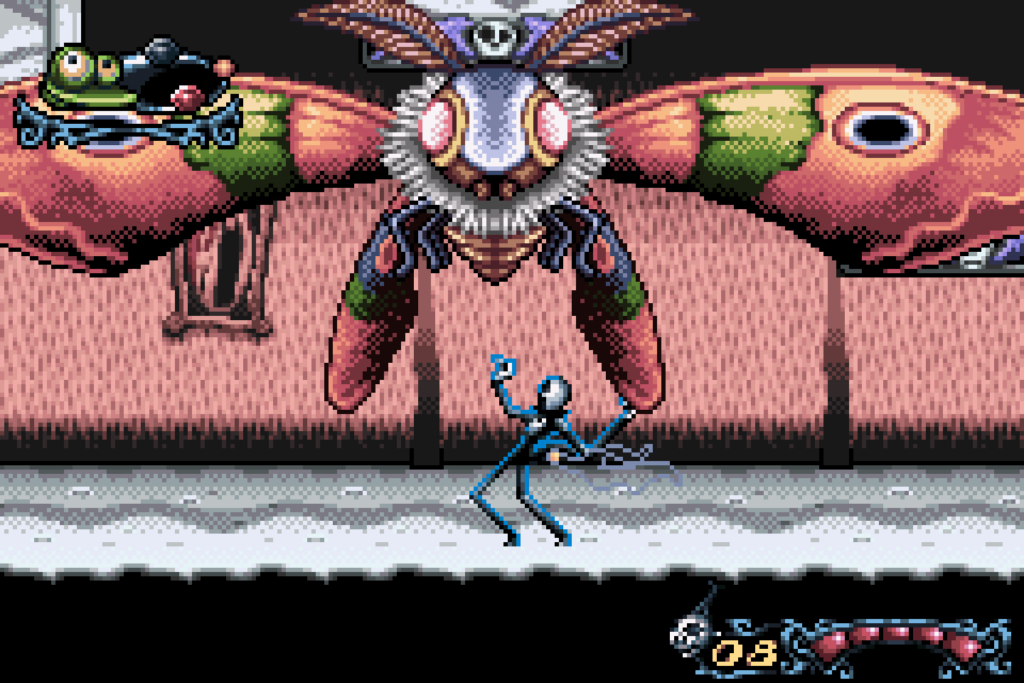
Other iconic characters like Lock, Shock, and Barrel, the mayor, Zero, etc. are given appropriate care and character so that their interactions and writing are fun enough even if you have no attachment to the IP. Given the nature of the antagonist, bug types are what inform the enemy design, which possibly sounds plain on paper but as you can see below, TOSE did not phone it in.
When in control, Jack’s slippery movement might be somewhat off-putting at first but it provides the base for a lot of the level design to work appropriately as the the platforming and action often requires juggling if you have space and time to ramp up your speed and tweaking the jump height. You are not going to be reverse-backdashing all over the place like a madman but traversal before and after you have gotten used to the feel of the movement has an obvious difference.
The game’s verticality is where a lot of the platforming puzzle elements come into play. While the room layout often makes no sense in the context of the area (Pumpkin King is hardly alone in this), figuring out how to reach higher places is intuitive, occasionally clever and at worst, obvious but inoffensive.
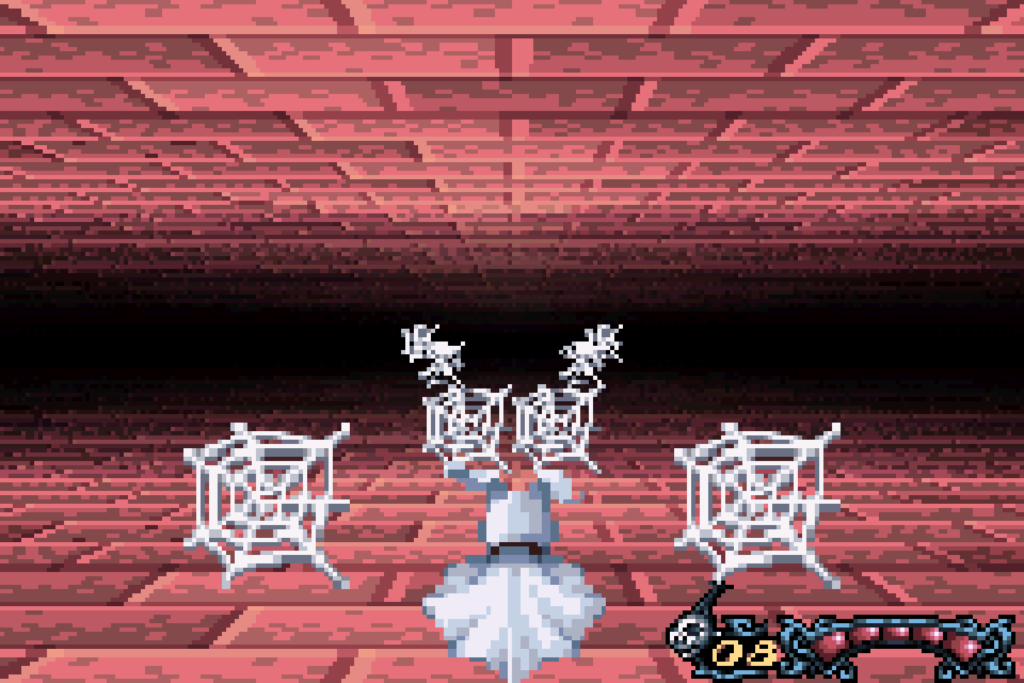
The game doesn’t shy away from experimentation, like Zero’s mode 7-esque sections where you navigate tight spaces in pseudo-3D, a weird stealth section, chase set pieces and other largely successful gameplay switch-ups. Boss fights are on point as well, leaning more into Metroid’s emphasis on positioning and figuring out the correct angle from which to hit the boss safely.
In short, the fundamentals are very solid, which is no surprise coming from an experienced 2D developer like TOSE.
Of tall ledges and climbable walls
Incorporating Metroidvania tropes is where Pumpkin King does not stick the landing, however. The map uses Halloween Town as a hub from which to access other separate but fully realized areas. Sadly, the navigation element is barely present as the map design almost always directly funnels you to your next destination and if that was not enough, NPCs straight up tell you where to go to proceed every time you beat a boss or complete an important story point.
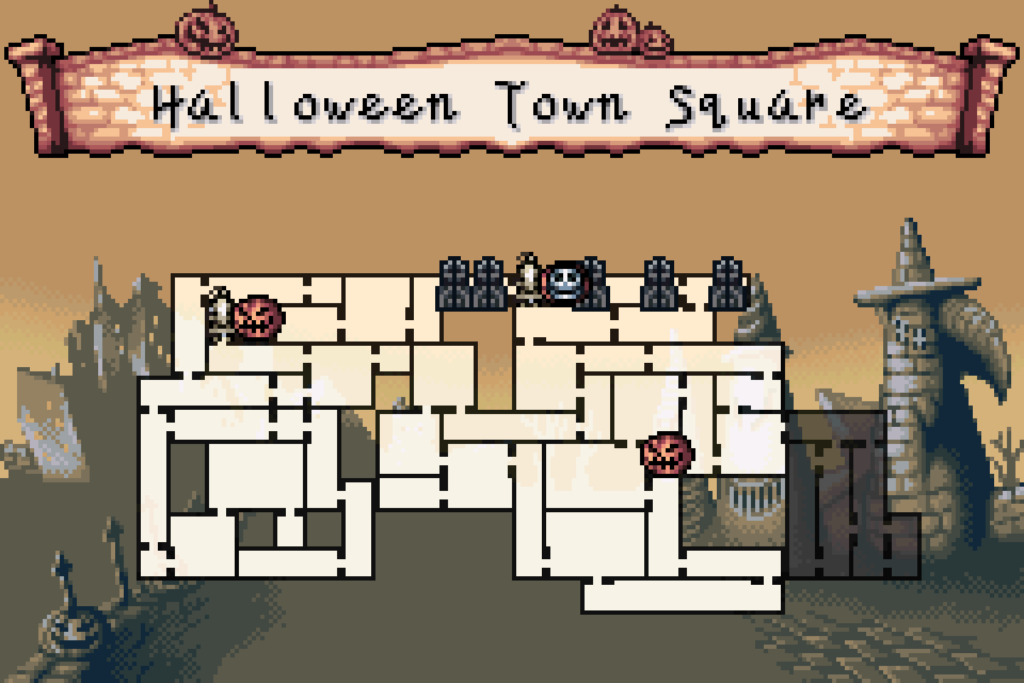
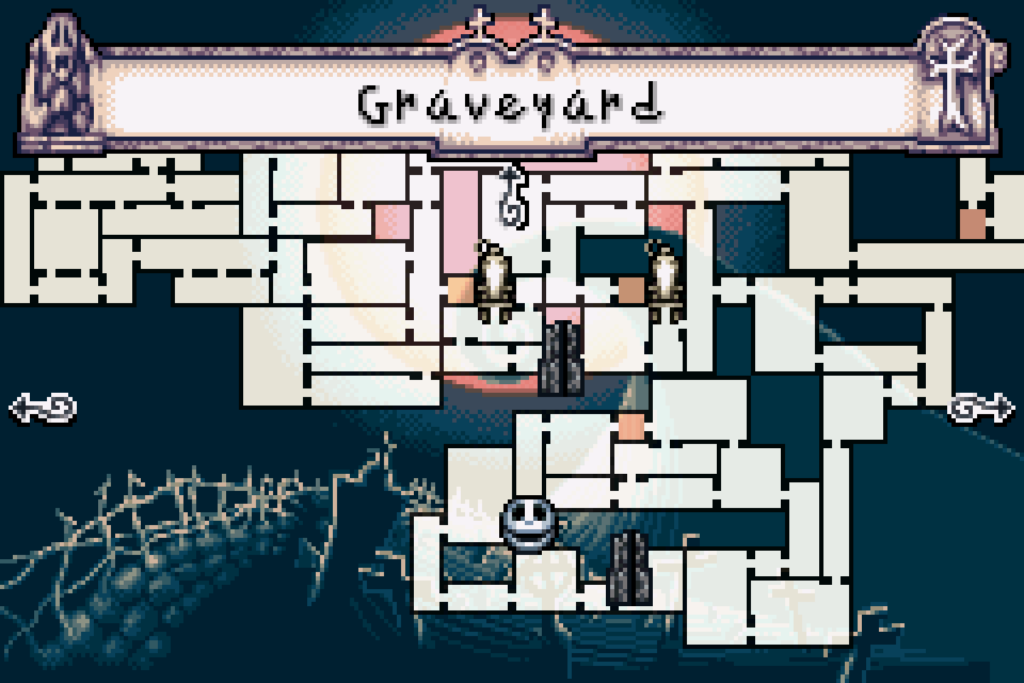
Collectibles that require backtracking are present but once again, the implementation feels like checking off a genre characteristic from a list. You have your standard HP upgrades but all other pickups are belongings of the series’ characters, serving no use other than being collected. The map is also fully available from the start, eliminating the need for any mental notes about optional routes and access points. This is a stark contrast to the actual platforming challenges required to collect the optional pickups, which fully utilize Jack’s toolkit.
The biggest missed opportunity is how navigation-related upgrades are functionally identical to colored keys. Merging progress-related upgrades with combat/movement skills is the genre’s best feature. A frozen enemy by an ice beam is both a sitting duck but also a new platform. Pumpkin King does not even allow you to use most of your new toys outside designated spaces. Some of the weapons and their upgrades see slightly more creative uses but rarely, if ever, will they give you the feeling that they are versatile tools.
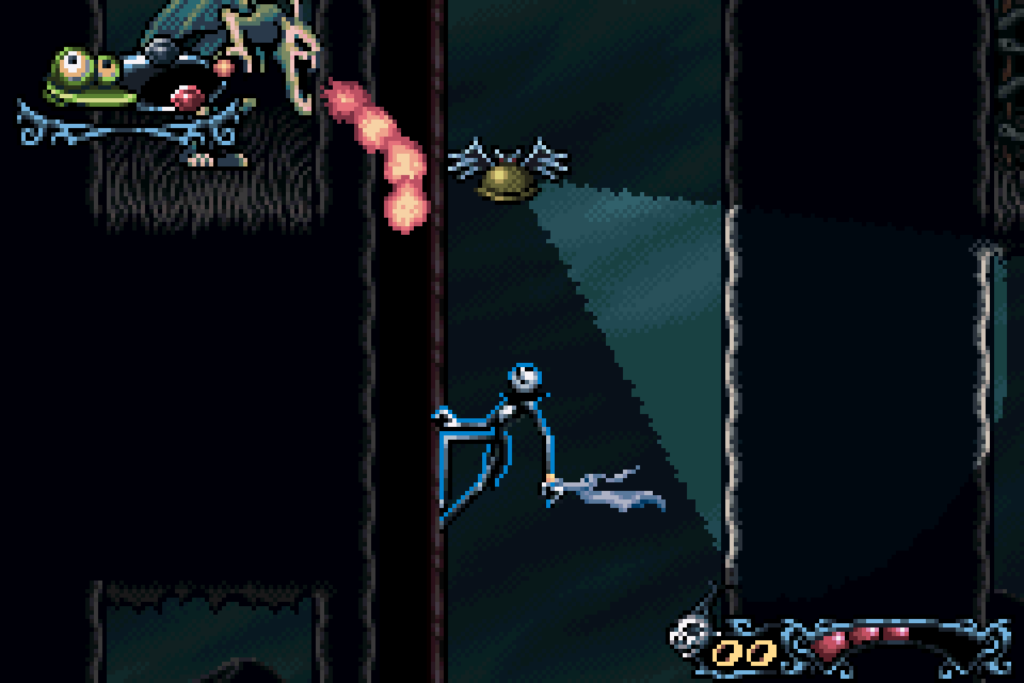
All the above give it the feeling not of a game whose ideas led the designers to a persistent interconnected world but one that had its genre decided and its building blocks, however good, haphazardly fitted to suit that mold. What makes this even more puzzling is that the final area contains counterexamples to most of the aforementioned criticisms, belatedly showcasing that this is not a case of inability on TOSE’s part.
Not a Nightmare
It would be remiss of me to neglect mentioning that The Nightmare Before Christmas: The Pumpkin King came out in 2005 and, just as I mentioned elsewhere, Metroidvania wasn’t a mature, populated genre back then. Maybe the novelty of a functional attempt at this structure was enough at that time to work for it and not against it. And the end result, taken as a whole, was certainly worth my time.
The reason a bigger chunk of this piece is spent on its failings is because they are interesting. None of its weaker aspects cross over into being truly bad but it is fascinating how the game refuses to take the next step on almost every single core attribute of the genre beyond a baseline implementation.
There is also something to be said about the fact that I’ve spent a significant amount of time articulating why Pumpkin King doesn’t excel at the genre’s conventions, yet I would almost certainly never had played it if it was not a Metroidvania.