Kirby & the Amazing Mirror – The one where Kirby gets a map
Metroidvania has become an incredibly popular subgenre so it might come as a surprise that in the early and mid 2000s, the genre was almost exclusively represented by the second half of its namesake, the GBA Castlevania trilogy. However, you could see a vague influence on some platformers, even if it wasn’t enough to place them within the confines of the subgenre.
Kirby & Amazing Mirror somehow ended up being one of them.
Not the feature on display
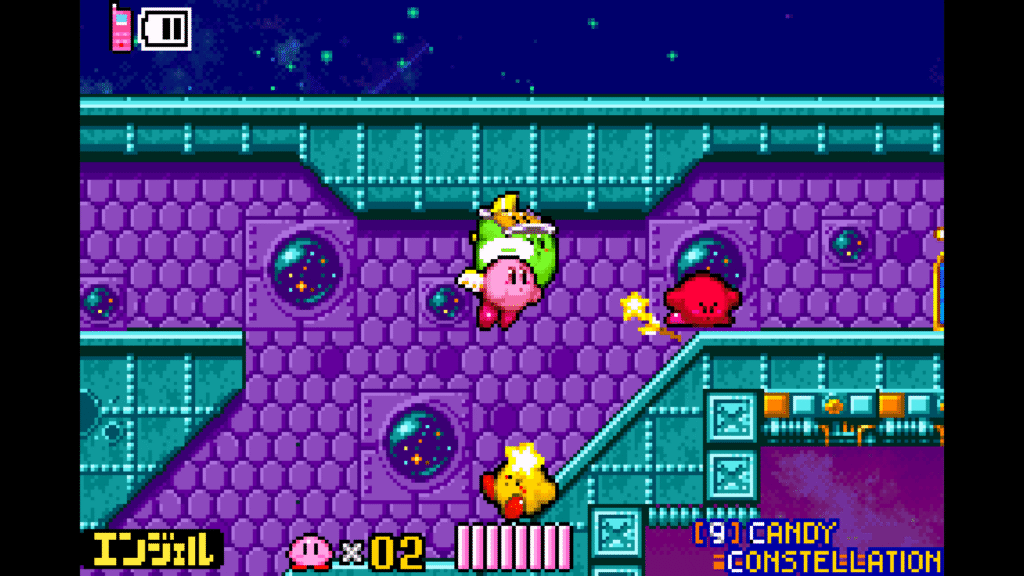
There’s a decent chance that most of the information you have absorbed about Kirby’s second GBA outing is related to its progression structure. But it was the multiplayer, or at least the call-in mechanic, that was front and center in the promotional art, back-of-the box text and most anything I can find.
Due to fascinating story events, you can utilize a phone to call-in Kirby clones that either follow you around and aid Kirby in fights or explore the map on their own. Normally CPU-controlled, these clones are the vector for introducing multiplayer, where people who also own a copy can connect using the GBA Link cable and help the host player progress through the game. The phone provides more in-game options like calling friends for back-up, which acts as a way for them to teleport to your location, life sharing and more.
There is probably more to be said about this feature and how ambitious it is to have this kind of asymmetrical multiplayer on a GBA but neither did I manage to get anyone to buy a second copy and play with me (though I hear it is possible through NSO), nor is it the thing I found most alluring,
Kirbyvania
The way the Amazing Mirror approaches the exploration aspect is by remixing ability-blocked paths and switch rooms that appear in Nightmare in Dream Land, which now unlock routes to different areas instead of providing extra items and opening up bonus rooms in the world map.
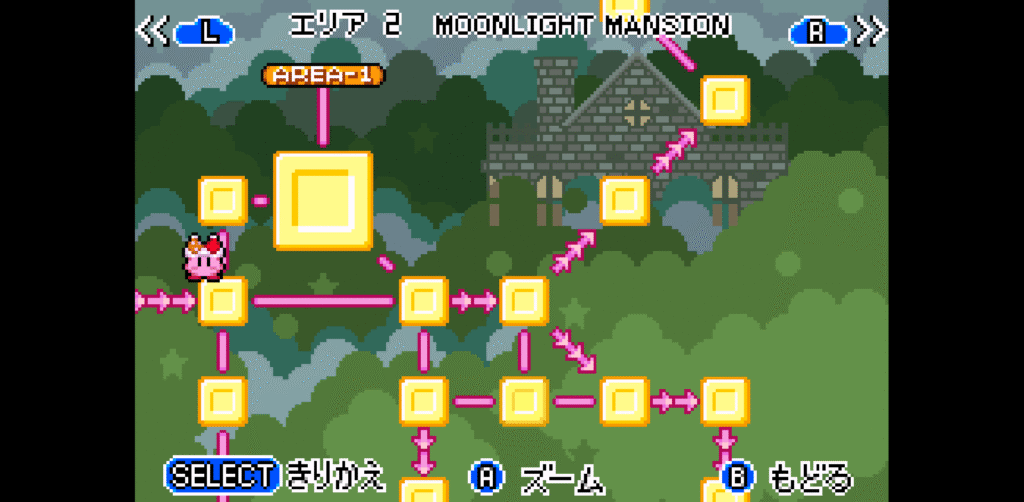
The approach is also differentiated from your standard NES/SNES platformer with alternate paths by having those routes cross either within the same area or connect in a completely different spot in the game. Some route obstacles require copy abilities you may not have come across yet so you are mentally mapping enemies to be sucked with past obstacles throughout your playthrough. You often need to carry a copy ability from a room several transitions away or explore suspicious spots on the screen to uncover a secret passage.
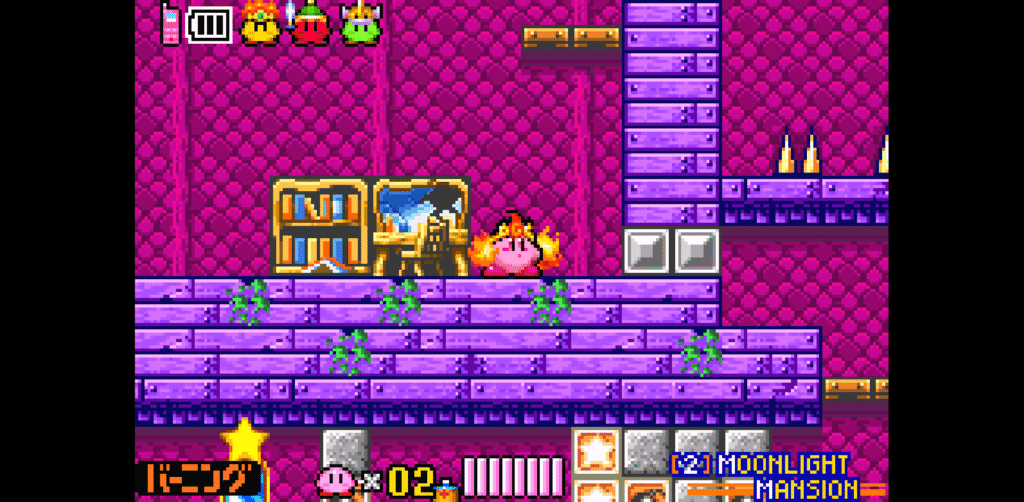
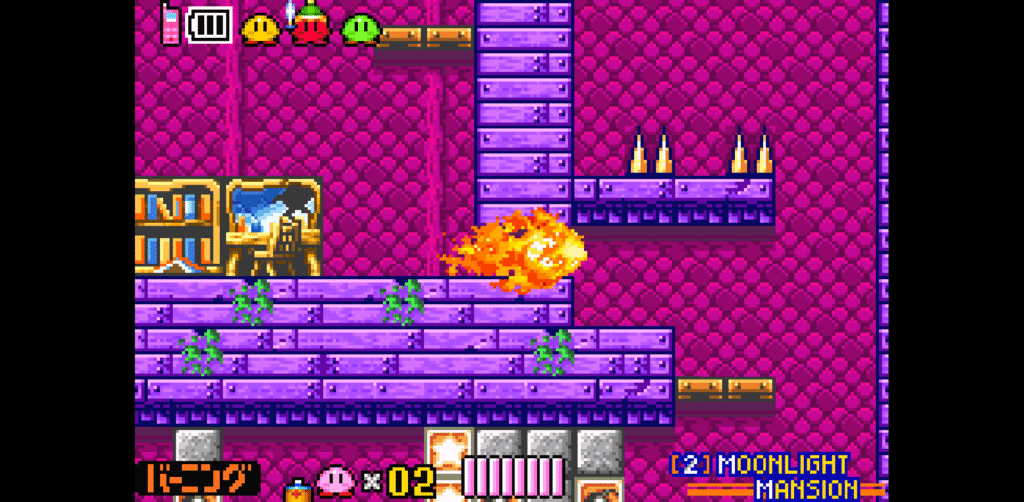
But that is about where Amazing Mirror’s characteristics start moving away from Metroidvania tropes. You are not tasked with physically backtracking to a previous area to utilize a new, permanent ability. Whether its your first time in the room pictured above or you found a copy ability in world 5, had an epiphany and mirror-shortcut’d back to world 2, Kirby’s core abilities will be the exact same.
In a lot of cases, you are not even able to walk back into an door you just entered, as noted by the one-way arrows in the map image above. To revisit that room, you would have to exit to back to the main screen, find the closest shortcut to that room and run back there.
Moreover, any second passes through previous areas to find non-mandatory items will mainly wield collectibles, with the only exception being a few HP expansions.
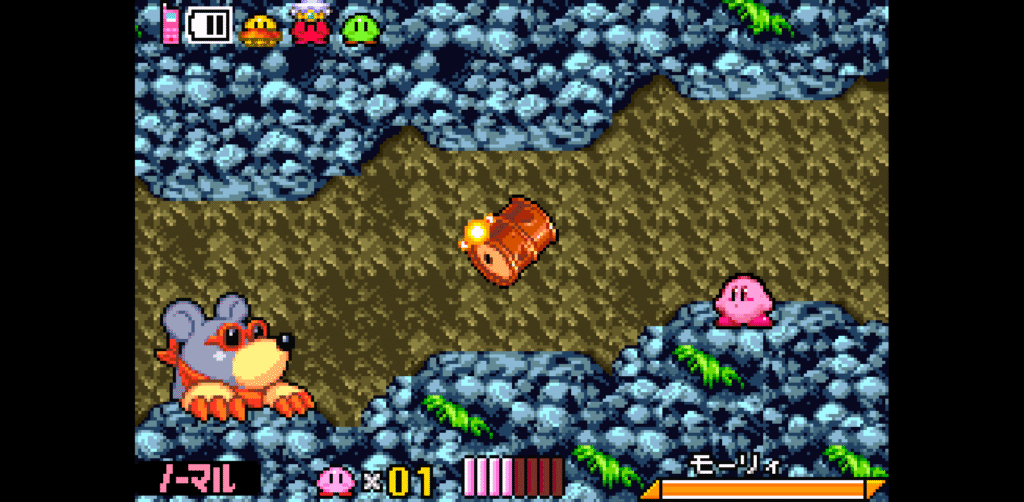
Your goal is to find all bosses that provide a piece of the Amazing Mirror upon defeat. And your tools are a more advanced selection of what the previously offered in Nightmare in Dream Land. The existing copy abilities have been given new moves and additional ones were added, getting your options closer to what you would expect if you found this game after experiencing modern 2D Kirby entries. Boss encounters are also more creative in the Amazing Mirror and a very pleasant step up from Nightmare.
Is the mirror that amazing?
There’s a certain lack of friction in most of the mainline 2D Kirby games. I realize that it is by design. It is also the reason why I find myself enjoying Amazing Mirror more than the rest, as some friction finds its way into the game. It manifests when navigating the branching paths with a map that portrays rooms as squares and also in the more enclosed area design. It compliments the barrage of options Kirby games give you and nudges you towards experimentation.
As for the genre discussion, I don’t view the Amazing Mirror as a Metroidvania. It is the spawn of whatever design philosophy gave us Wario Land 3. Scientifically engineered to be close enough to pop up in genre conversations but far enough to make those conversations fill several forum pages.