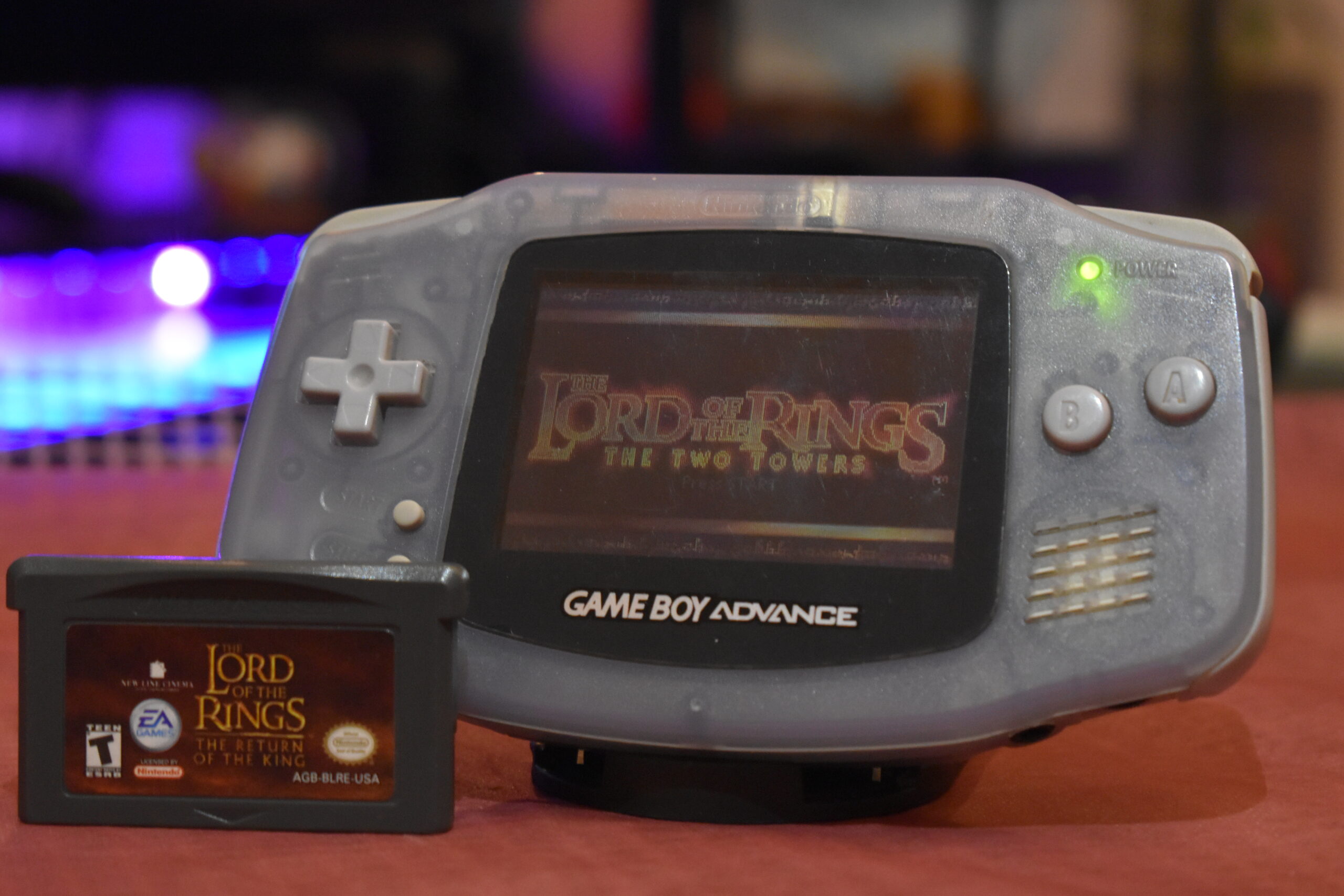
Lord of the Rings on GBA pt1: Looting Middle-earth
Before you become a part of gaming communities and immerse yourself in genre talk and its jargon, you tend to just stumble upon new genres through unlikely avenues. Even more so when you are young and not the one choosing the game purchases. A license like The Lord of the Rings is more likely to catch your attention that a description of the game’s design.
Personally, the term Action RPG conjures images of Tales of, Star Ocean, Ys, later Phantasy Star games and the like. The abstraction of hit% is swapped with actual spacing and hitboxes and customization is present but becomes more restrictive as the active combat takes the wheel. This does not apply to all of the titles in this space but it is the core around which most gravitate.
The west had another approach the “A” in RPG. And my gateway drug to that approach was the GBA’s Lord of the Rings duology.
Diablo by any other name
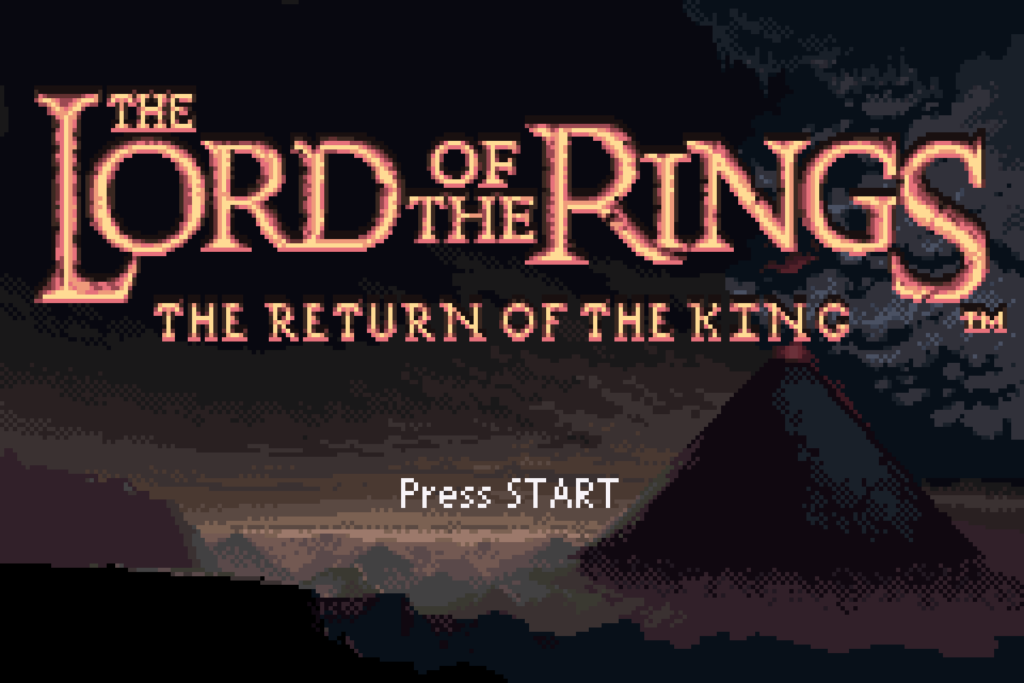
Both games aim for achieving a pocket version of Diablo, set within the Lord of the Rings universe. The first part means that you have full control of your character’s movement, you can use an assortment of passive an active skills, enemies drop lots of loot with different modifiers for you to sort through and you have a considerable say on how to build your character, both through stat allocation and skill selection.
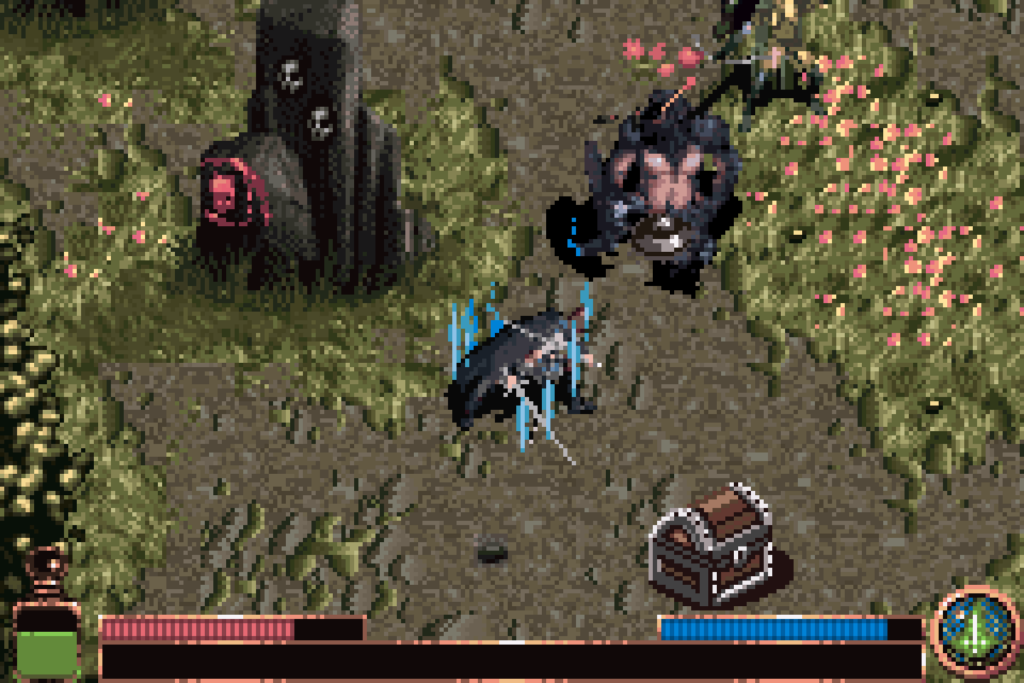
For those that were as oblivious to the conventions of these games as I was when I first played The Two Towers, both you and the enemy need to be mindful of the actual game space to hit each other but there is a dice roll that governs whether you actually do damage/get damaged, which is affected by your stats. You also do not generally get twitch maneuvers like a dodge roll or a parry so your mechanical skill can only produce results within the confines of the RPG elements.
As for the license, both games closely follow the events and aesthetics of the corresponding movies. You have different character campaigns, which double as class selections. Gandalf fills the role of the wizard archetype but also tackles different events than your archer class, Legolas.
The Two Towers: Foundations
The Lord of the Rings: Two Towers is a blueprint for commendable attempts at the oft-ignored movie tie-in game. It builds around a very solid western ARPG core that functions well when choosing both ranged and melee and draws upon the established aesthetic and score to mask the fact that the visuals would not really be serviceable if your mind wasn’t filling in the gaps with the film’s material.
We are going to be looking at the game through the lens of a slightly non-conventional Legolas build. The best test of a game’s build variety is the viability of some ill-advised but cool sounding playstyle. Built to live or die based on proper kiting, Legolas here is going to dump almost all attribute points to accuracy and make a beeline for movement speed passives and a crowd control ability.
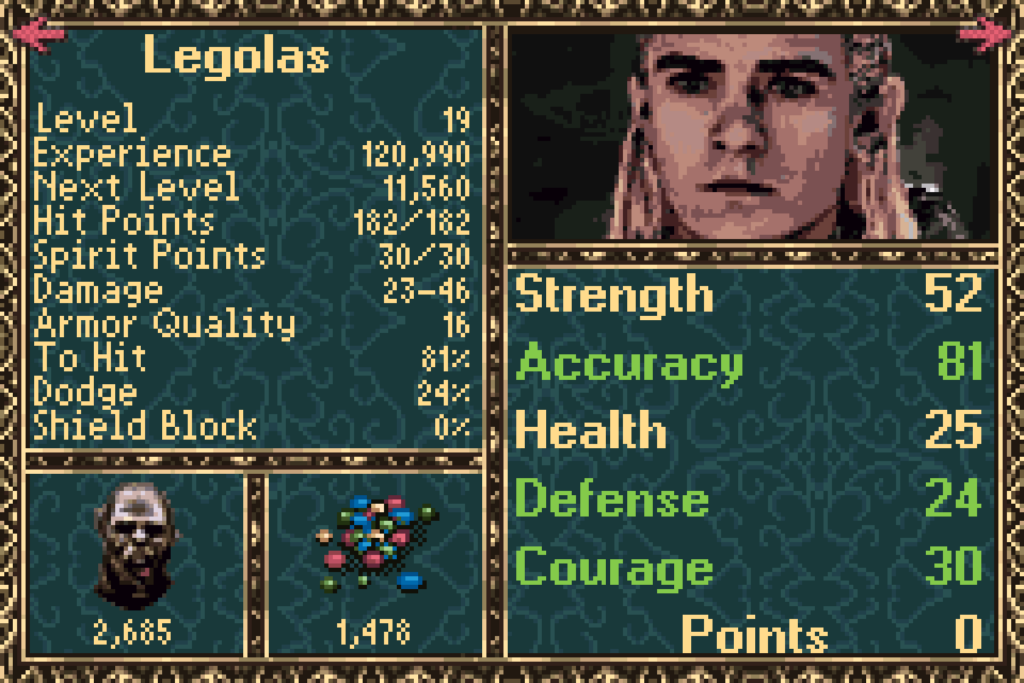
Unlikely to both miss and survive an attack 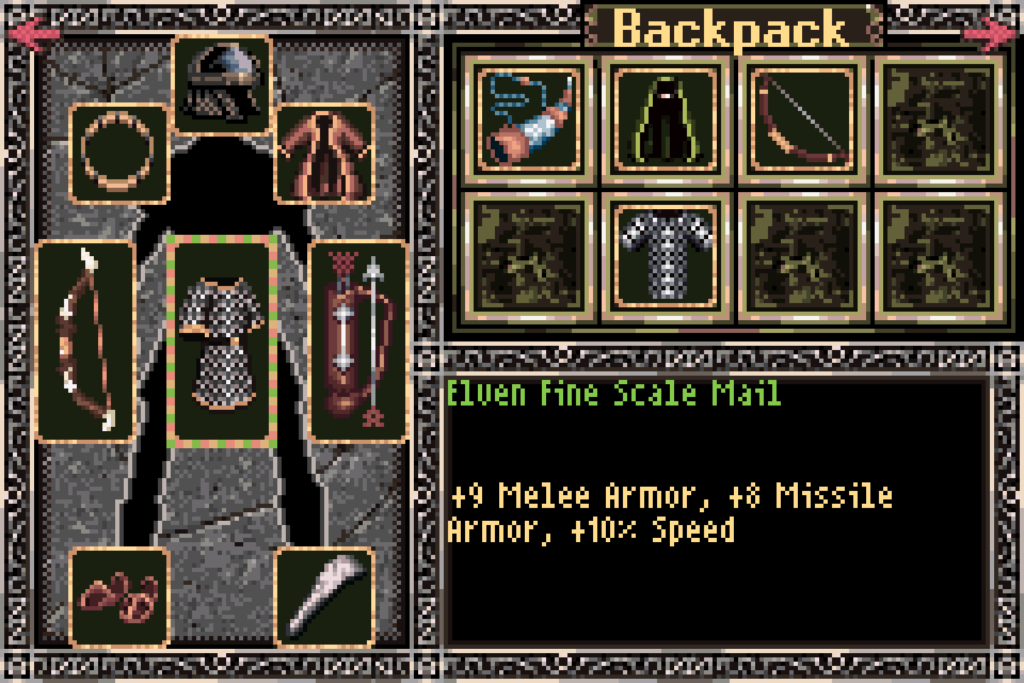
Optimizing for movement speed 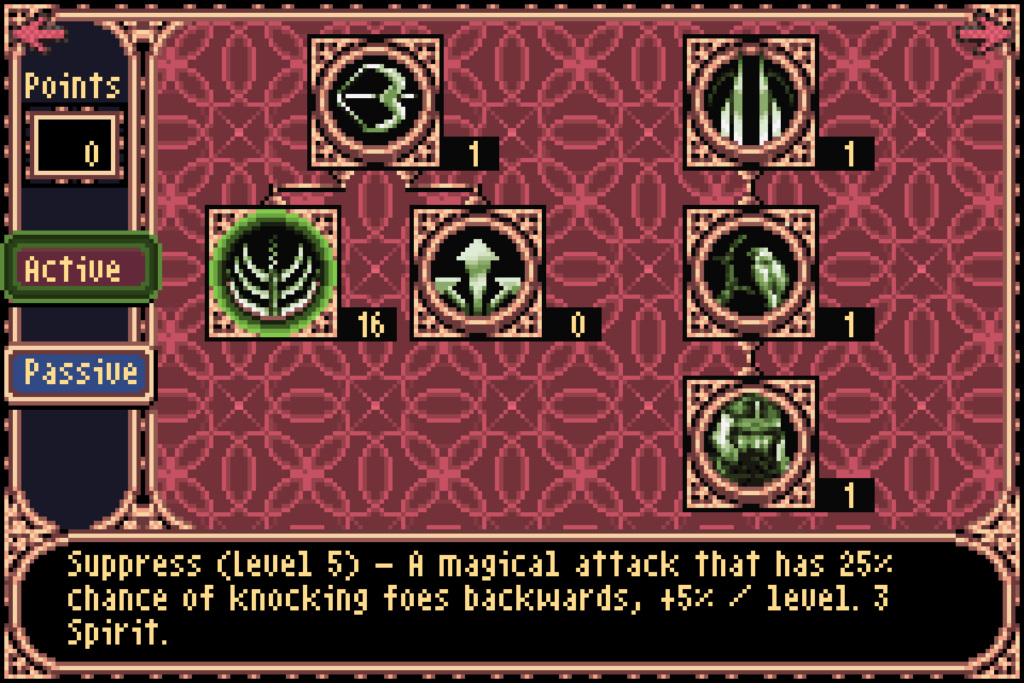
70% chance for knockback means Legolas can usually get 2 more arrows in
The structure of the game is linear with no backtracking or towns to speak of, so the gameplay loop consists of progressing through sub-areas while killing orcs and the like, picking up loot and managing your inventory so that you both have the best equipment for your build while making money through selling the rest to the pseudo-shops the game occasionally throws at you. A side effect of the short and linear nature is that the item stat bonuses you’ll come across in the span of an hour are more substantial than you would expect.
Middle-earth is sorely lacking in enemy variety, however. Different colored orcs and goblin variants are the vast majority of what you will be facing. Speed and attack increases do change how you approach them and the game integrates the film’s major set pieces quite well but it’s mainly trap formations and restrictive terrain that do the heavy lifting when it comes to variety.
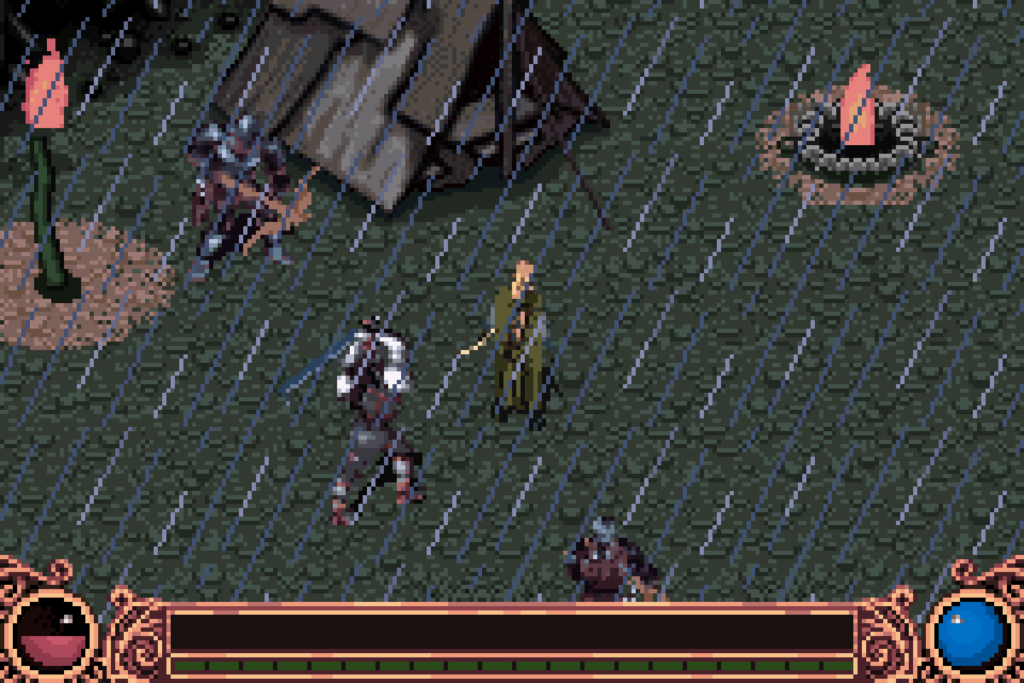
Which, surprisingly, did not take away from my Legolas playthrough. By midgame, the build had taken form and he was zipping around the screen, alternating between normal attacks and the knockback skill Suppress to create space, occasionally using a melee attack to stagger something that got to close. Within the context of the game, where you have limited vertical visibility, enemy staggers, crowds, MP management and the damage present in a Hard playthrough, I am hard pressed to recall any time the repetition became too apparent.
Even more validating was that upon completing the game and experimenting with other skills, it was immediately obvious that I chose comparatively bottom tier skills to build around, yet the running elf run was both fun and viable.
Return of the King: Polish
The Lord of the Rings: The Return of the King utilizes the breathing room earned through having the pre-existing fundamental mechanics to build upon by adhering even closer to the Diablo experience and polishing up the presentation.
You see, beating the game and jumping to another cycle on a harder difficulty to farm those sweet equipment modifiers is a bit of a staple in these games. And while Legolas was able to start fresh on Hard in the previous game, Return of the King puts a swift stop to such ambitions.
Meet Eowyn, the shieldbearer. If the Legolas build was an attempt to mostly engage with the action side, this one aims to abuse the RPG elements of the title. The goal is simple, max out the shield block active buff, the relevant passive and grab enough spirit points to have the former up at all times. Get into range and mash the B button until the silicon pads beneath it get mushy.
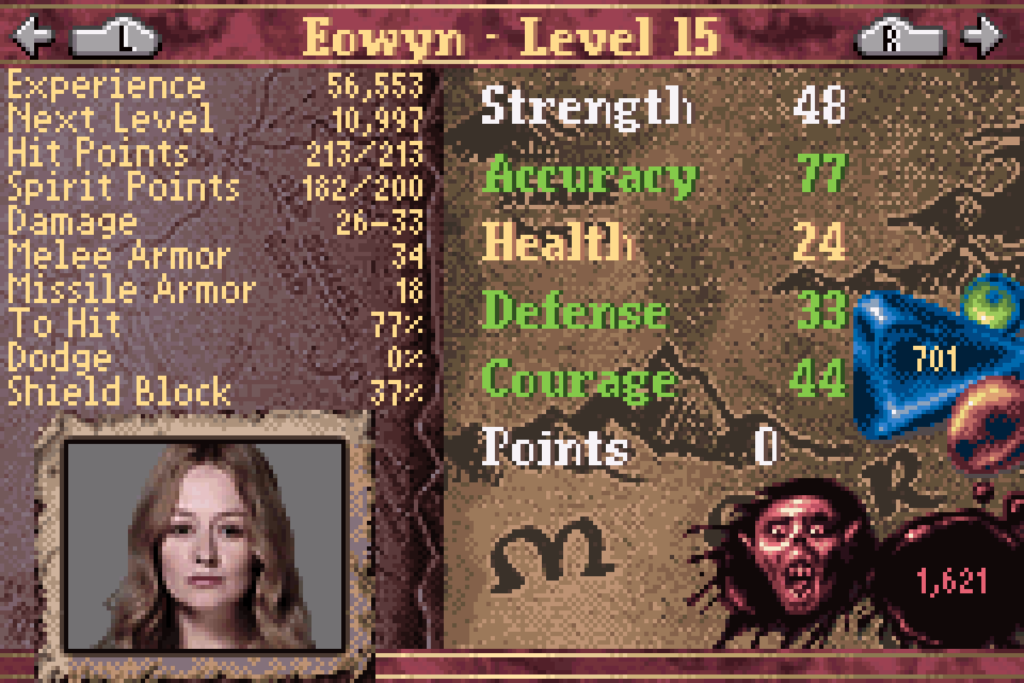
37% shield block from equipment and passives… 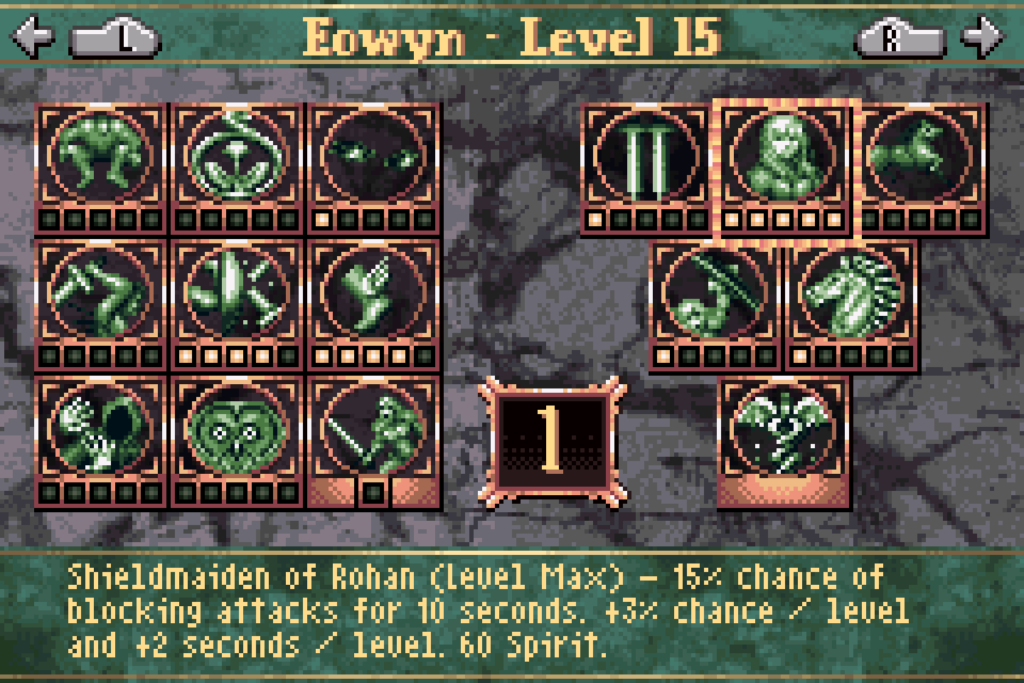
… becomes 67% with Shieldmaiden of Rohan active and maxxed 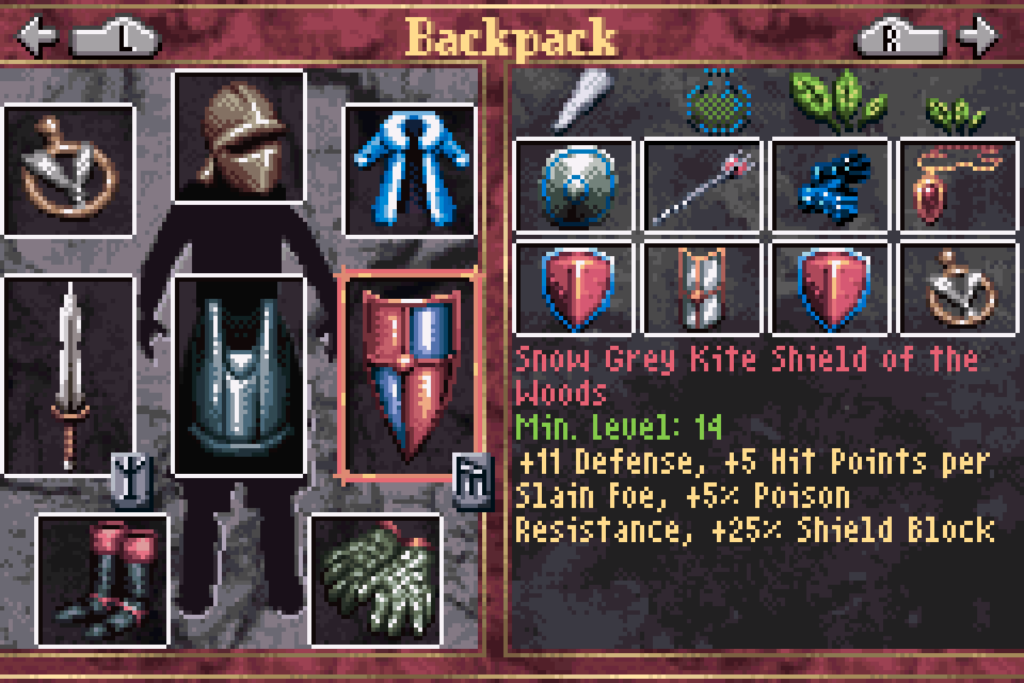
A little more sustain from per-kill healing never hurts
Return of the King benefits not only by the polish afforded by its nature as a sequel but also from the more varied battle scenarios the movie material provides. There are more enemy types and unique set pieces here. The movie beats play out even better, with music timing and big fights landing with more impact.
Some thoughtful additions like allowing item transfers between campaigns and unlockable characters are also present, enhancing the replayable structure of the game. One of the biggest QoL additions that is not immediately apparent is the Quick Skill feature that, once turned on in the options, will allow you to assign active skills to button combinations instead of cycling through them.
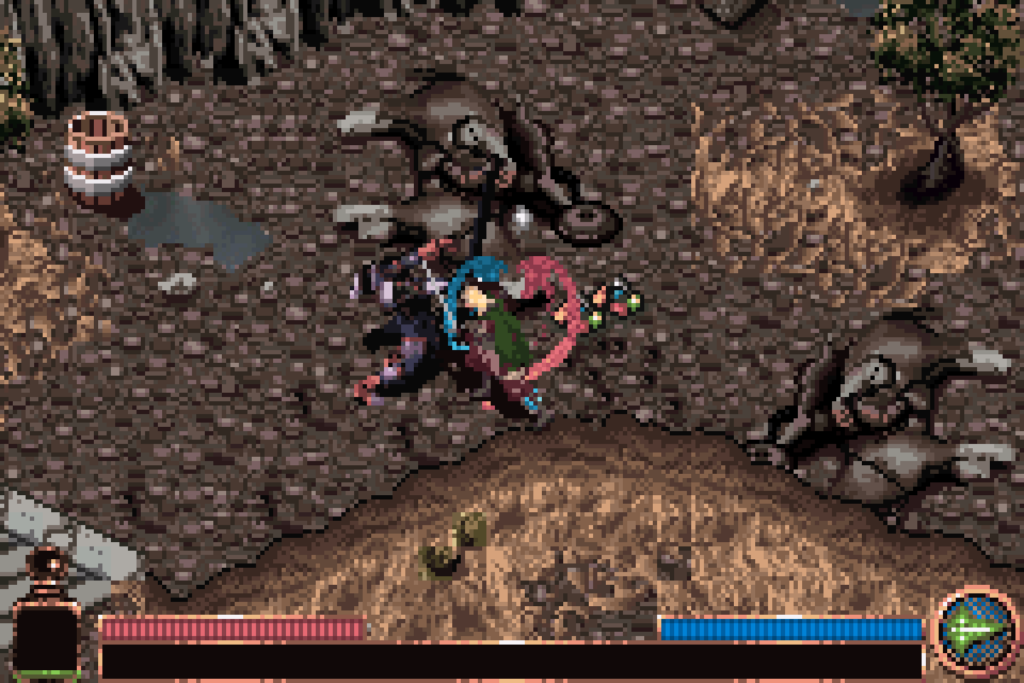
This time around, going with what I assumed to be a gimmick build landed me on a very efficient setup, with Eowyn rushing into crowds of enemies and most of the time, coming out alive. Moreover, the urge to start a new run on Hard in order to push the build even further was instant, leaving me with the realization that the devs had more than lived up to what a pocket version of Diablo sounded like in my mind.
A trojan horse
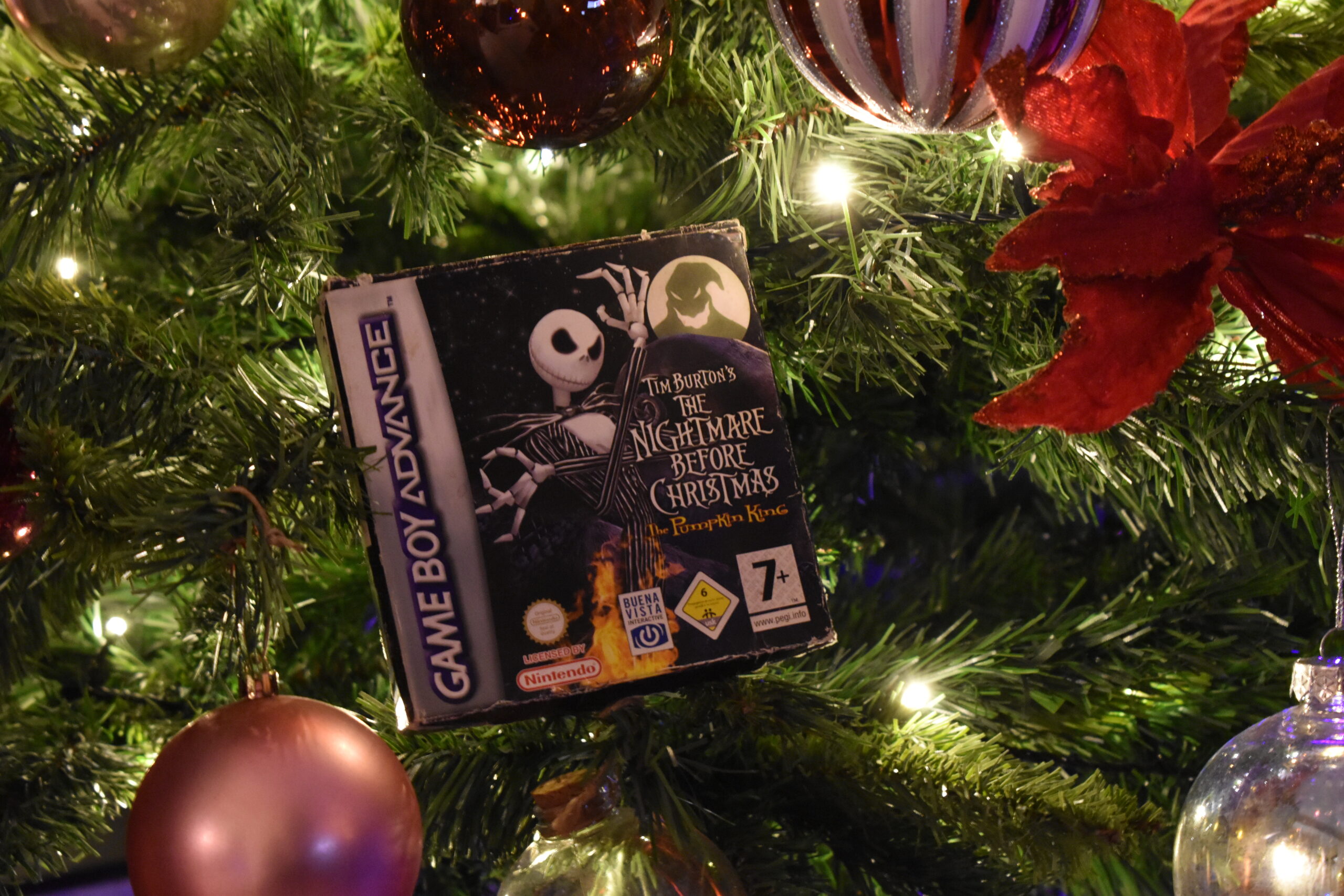
Just like TOSE’s The Nightmare Before Christmas: The Pumpkin King, what could have been a throwaway licensed project was instead enhanced by an unusual genre, coupled with a solid effort by the dev team.
More interestingly, these IPs are prime targets to act as introductions to genres some might not have had the chance to try out otherwise. I, for one, would not have played Dungeon Siege without having experienced GBA’s Two Towers. The Venn diagram between console games or Nintendo handhelds and western ARPGs does have some overlap but it is quite tiny so these two titles are quite valuable gateway drugs.
Truth be told, there’s been a bit of positive streak when it comes to revisiting childhood titles and the Lord of the Rings games felt like a possible end to that. Instead, I found that there is no rose tint on my glasses and Griptonite delivered experiences that deserve to live on as something more than just read-only memories.
Now, let’s see if a melee-only Gandalf build works.