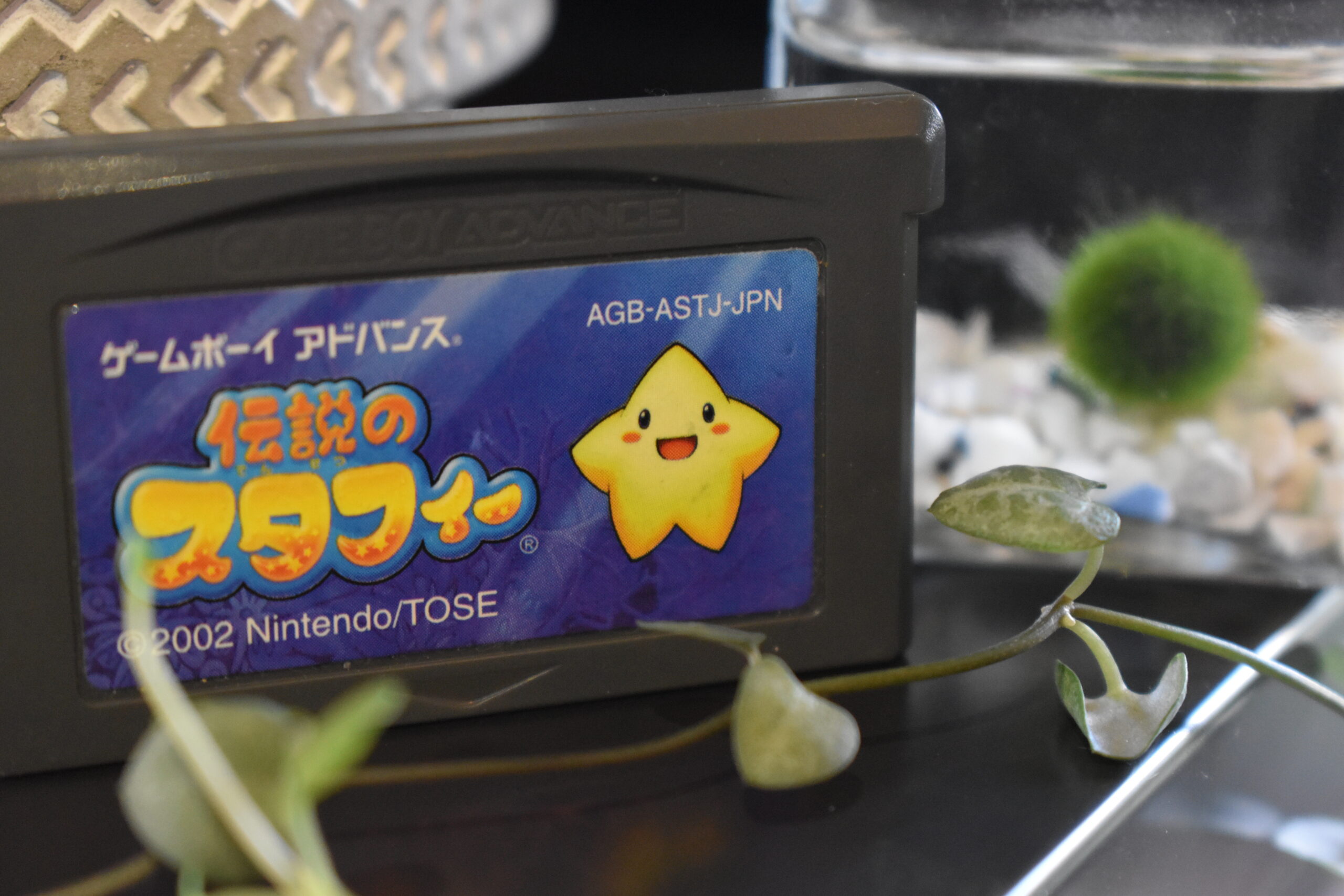
Densetsu no Starfy – TOSE’s star character
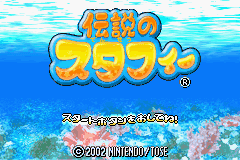
You may know TOSE as the under-the-radar dev that all Japanese publishers go to when they want contract work done. But there was a time when TOSE took a stab at developing and co-owning a new IP, Densetsu no Starfy.
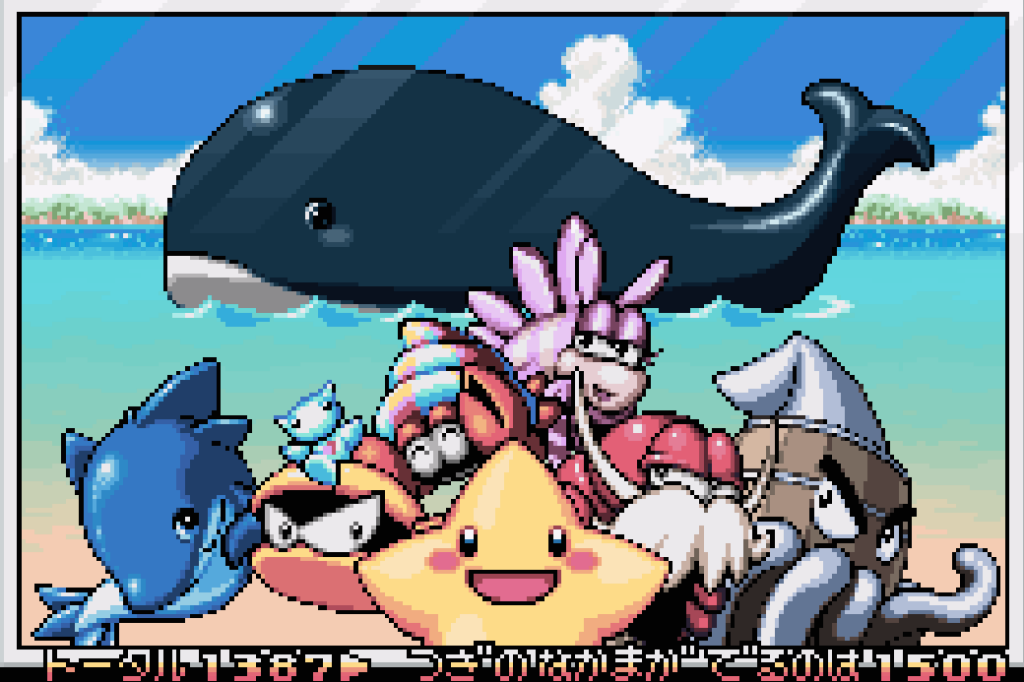
All games in the series until the last DS outing stayed Japan-only until Nintendo made the untranslated versions available on NSO, meaning this was an import only title until recently. However, like with several other GBA platformers, the language barrier is not that big of a hurdle to overcome.
Which is quite fortunate as there is an interesting contrast between a very beginner friendly platformer and some well executed but unconventional design choices that is worth experiencing.
Puzzle or action platformer?
Mixing a stage-based structure with some curveballs is not exactly uncommon for GBA platformers.
Not one to cheap out on unique sprites, Starfy’s path through each stage is interrupted by NPCs that are either in need of help or there to provide info on progression.
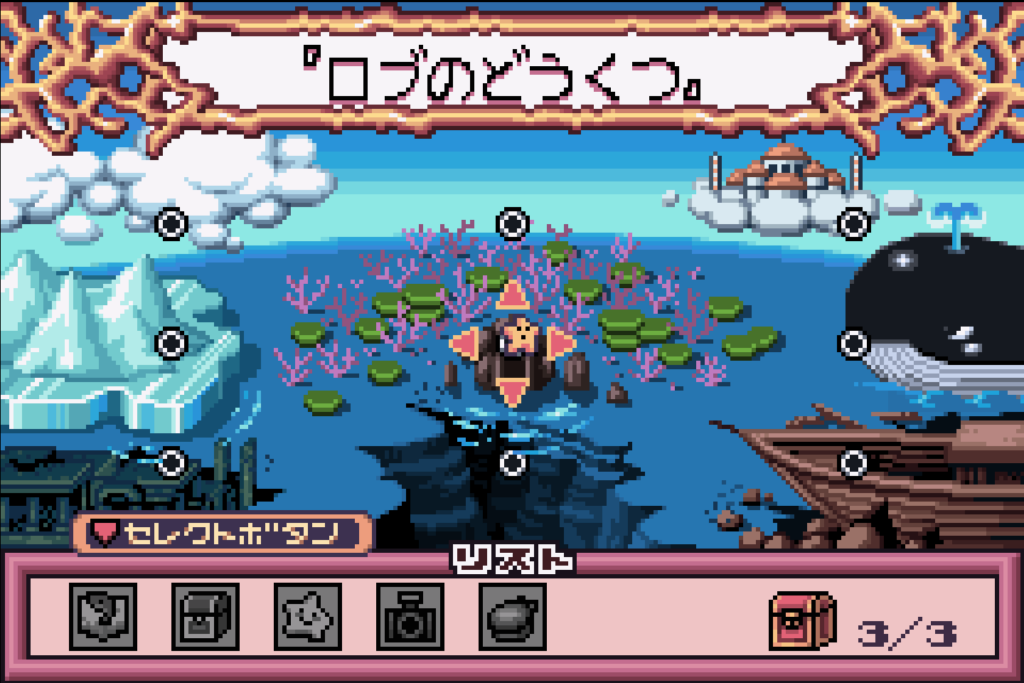
They also act as the point in a stage where the path branches out and you have to figure out which way is forward, which way leads to something optional and which way is blocked for various different reasons.
There is strong variety when it comes to the execution of this concept as the different paths can include standard enemies as obstacles, they can loop or they can even require you to physically bring back items to specific points. No matter which type though, the branches will converge into a single path in the end that leads to a boss fight, framed as a first-to-five-hits duel.
This lands Densetsu no Starfy between your classic A-to-B action platformer and the puzzle or exploration variants. And while this betrays Starfy’s struggles with a lack of direction, it also signposts the proposed solution, a constant barrage of varied scenarios.
An amphibious adventure
Densetsu no Starfy is split between water and land sections, with each handling very differently.
While underwater, Starfy can move towards any direction, pick up momentum and do a spin that acts both as an attack and as a speed boost. Since you are not in danger of falling into a pit here, the challenge comes from avoiding enemy attacks in tight corridors but more importantly, using the unique movement with some puzzle-solving intuition to progress.
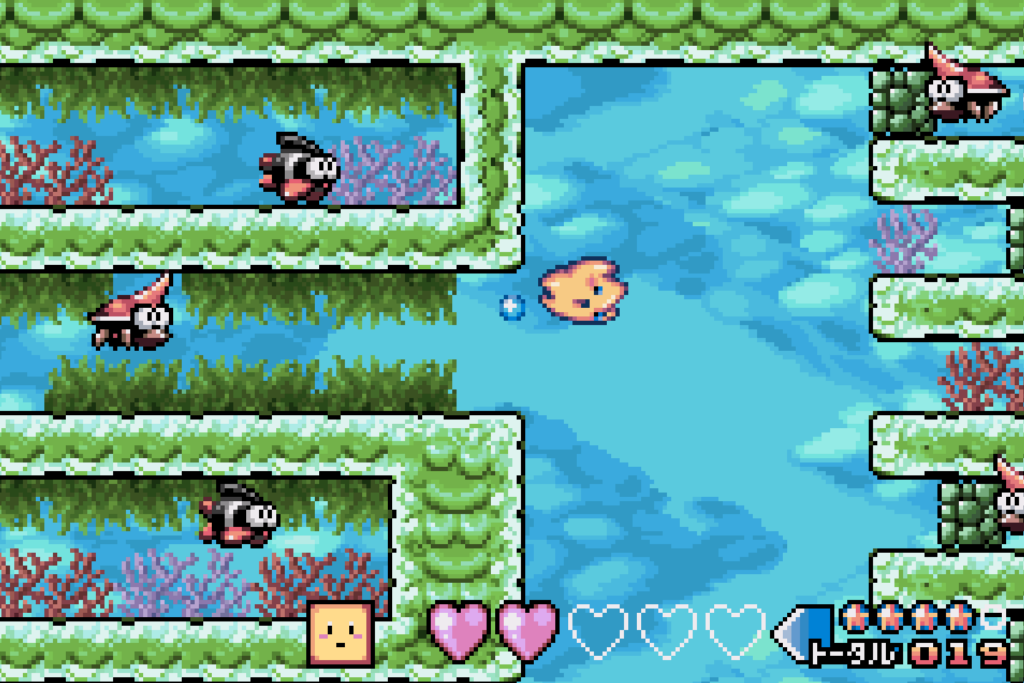
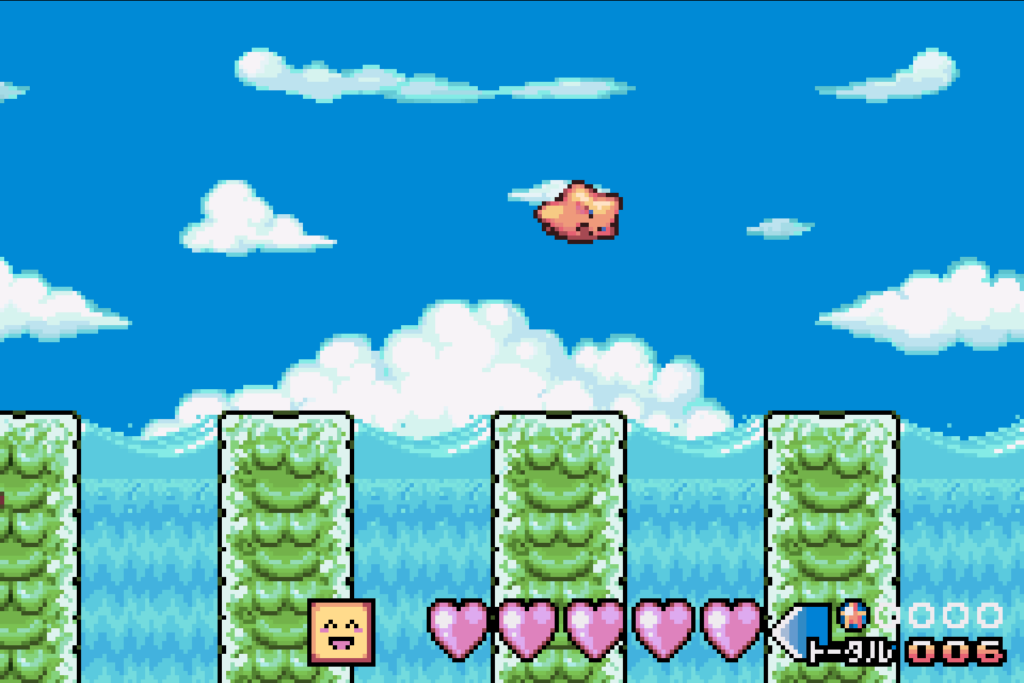
Moving towards the surface with significant momentum makes you launch into the air, similar to Ecco the Dolphin. This both feels satisfying and synergizes with the stage design, to the point where a greater frequency of these sections would be quite welcome.
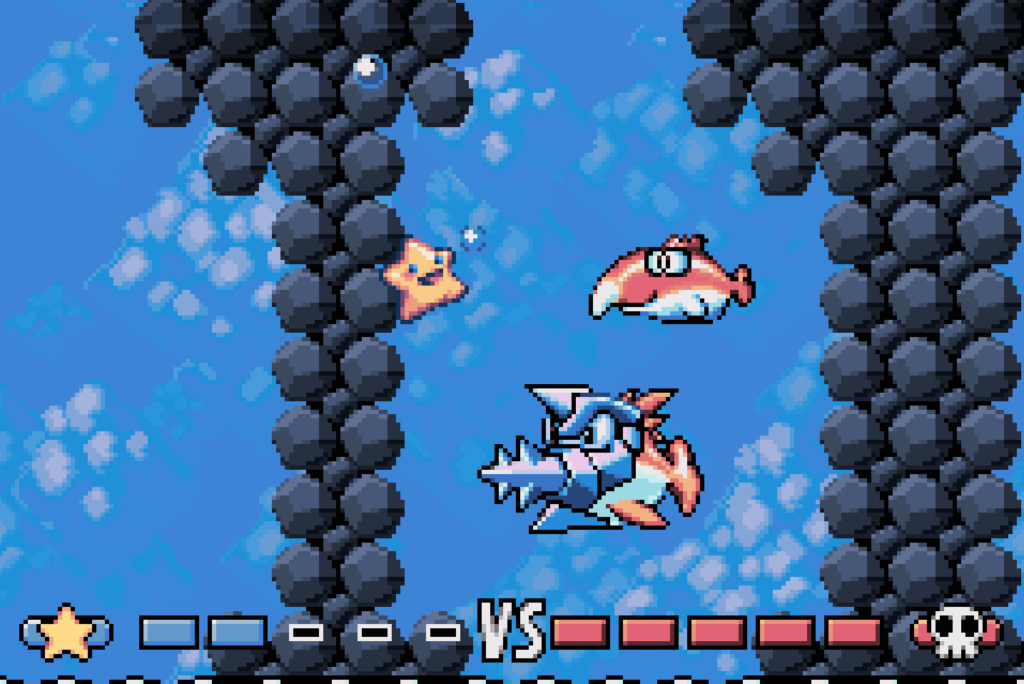
The omnidirectional movement also works well with challenges requiring you to push an object around and, to a greater extend, boss fights. Swimming around the screen to both dodge boss attacks but also be in place to strike their weak point or take advance of their gimmick could be a highlight if it wasn’t for the lack of challenge.
Starfy on land is less capable, trading movement freedom for a glide. This makes the land sections heavily dependent on stage gimmicks like bounce tiles or slippery surfaces, which are enough to feel like a welcome change of pace but would quickly wear out their welcome if the were longer.
An unorthodox approach
TOSE’s experience is quite apparent when it comes to sprite-work and portraits. No real missteps on the sound front either. But the game design expertise does not translate into an extremely polished experience or a tightly controlled challenge.
Densetsu no Starfy’s bet is that it has enough unique ideas and gameplay mix-ups to remain interesting and fun throughout its length. However, the lack of difficulty, while intended, has the side effect of not having any friction to fall back on if or when the novel design ideas don’t land.
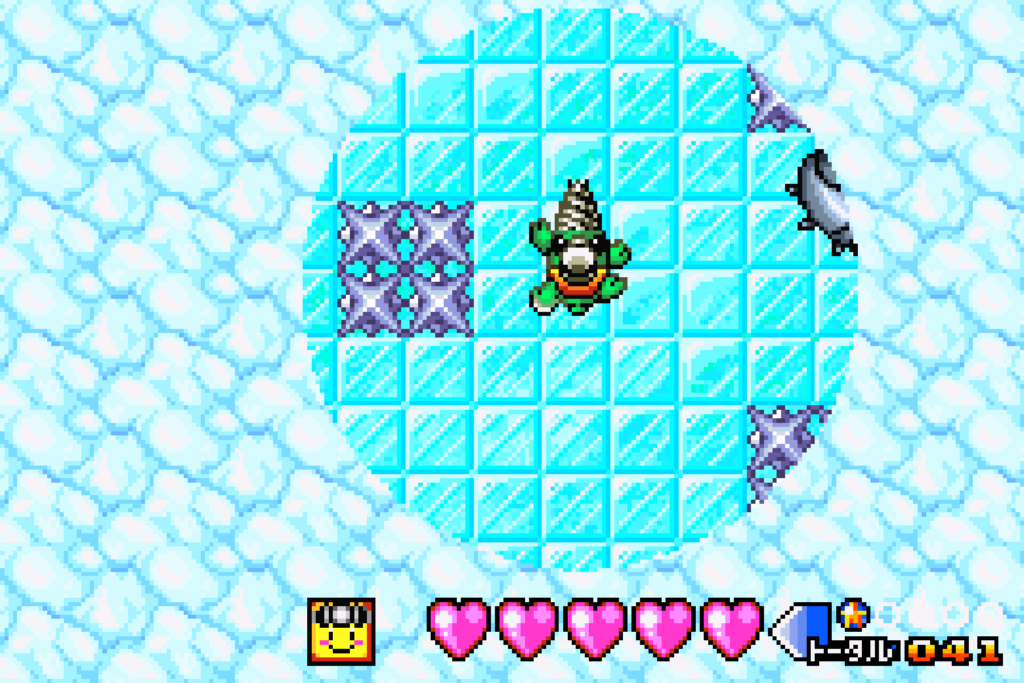
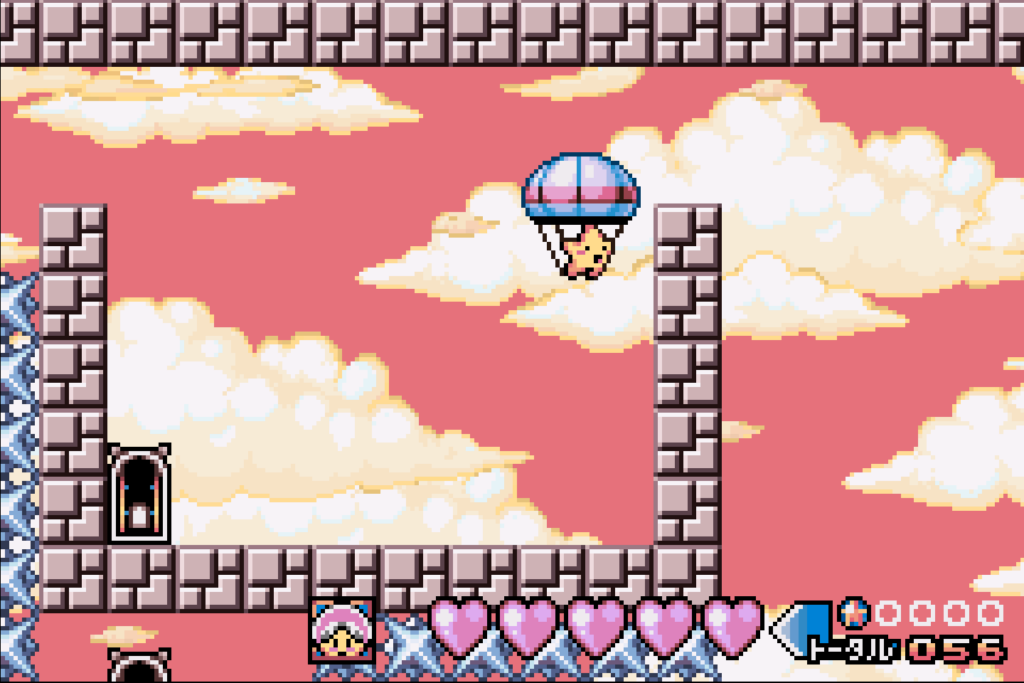
It is not as if there is no innate joy in moving Starfy around, hitting enemies and grabbing collectibles, which actually play into unlocking harder post-game content, but they are not enough to paper over the gaps created when the gimmick-to-length ratio goes off-balance.
Only the beginning
With the aid of hindsight, Densetsu no Starfy can be characterized as a starting point, one which defines the fundamentals that will spawn a franchise, therefore the lack of a strong hook can be excused.
Looking at it as a standalone experience, TOSE crammed more than enough ideas and artistry here to make a playthrough worth it but because it drops a lot of concepts without fleshing them out fully, I feel less positive when looking at this title without the context of its place within the series, like if I had experienced it near its release.
But I didn’t and I happen to already be invested enough to try the sequel and come back here to hopefully ramble about all the improvements.